If your Maryland home is due for new siding, the hardest part usually isn’t deciding whether to replace it. It’s choosing a material that can handle the state’s humidity, temperature swings, rain, and seasonal storms without creating more maintenance than you want.
Vinyl, fiber cement, wood, cedar shake, stone, stucco, and metal all bring different strengths, costs, and upkeep requirements. The right choice depends on your home’s exposure, the look you want, and how much maintenance you’re willing to take on over time.
What to Consider Before Choosing Siding
Before comparing materials, think about what matters most for your property. Maryland’s changing seasons can place different demands on an exterior, so siding should be evaluated for durability, moisture resistance, upkeep, and overall fit with your home.
Maintenance is another important factor. Some homeowners want a material that only needs occasional cleaning and inspection, while others are comfortable repainting, refinishing, or handling more involved upkeep to preserve a specific look.
Use these questions to narrow your siding options:
- How much ongoing maintenance are you comfortable handling?
- Is your home exposed to strong sun, heavy shade, wind, or frequent moisture?
- Do you prefer a traditional, modern, or more natural exterior?
- How important are durability and long-term upkeep?
- Does your neighborhood or HOA restrict siding materials or colors?
Once you know what matters most, you can compare siding materials based on your actual priorities instead of appearance alone.
Understanding Your Siding Options
Different siding materials can create very different results in terms of appearance, maintenance, durability, and installation. Rather than looking for one option that’s best in every category, focus on which tradeoffs make the most sense for your home.
Vinyl Siding
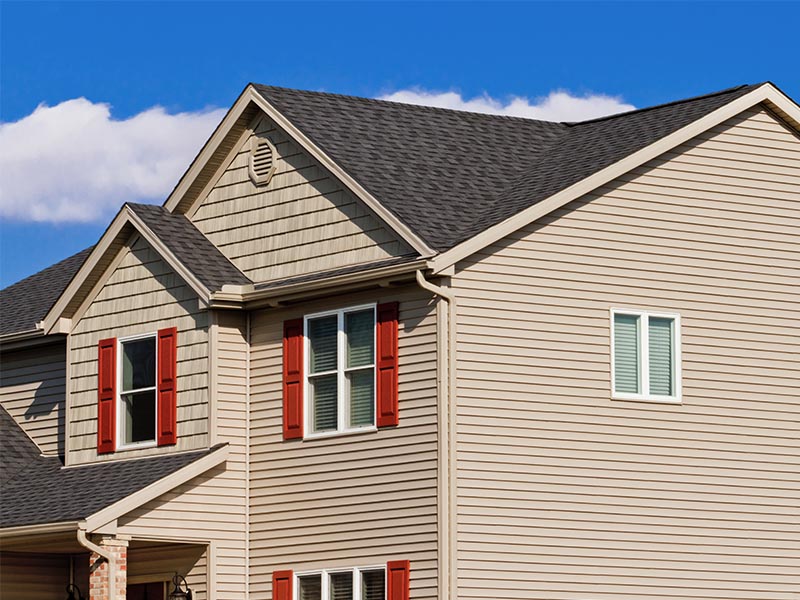
Vinyl siding remains a practical choice for many Maryland homeowners because it combines relatively low maintenance with broad design flexibility. Modern vinyl products are available in numerous colors, profiles, and textures, so you aren’t limited to the flat appearance often associated with older siding.
Vinyl also doesn’t require routine painting. Maintenance generally involves periodic inspection and cleaning when dirt, pollen, or organic buildup collects on the exterior.
Vinyl may be a strong fit if you want an exterior that’s easy to care for and offers plenty of design options. Proper installation is still essential because the material expands and contracts as temperatures change.
Fiber Cement Siding
Fiber cement is a popular vinyl siding alternative for homeowners who want a more substantial, painted-wood appearance. It’s available in several profiles, including lap siding, shingles, panels, and trim.
One of its biggest advantages is durability. Fiber cement can perform well through changing weather conditions when it’s installed and maintained correctly.
The tradeoff is that installation can be more involved than vinyl. Fiber cement is heavier and requires specific cutting, fastening, clearance, and finishing practices. Painted or factory-finished products also need periodic inspection and maintenance.
Wood Siding
Wood siding offers a natural texture and character that many manufactured products try to reproduce. It can be especially appealing on historic homes or properties where preserving a traditional appearance matters.
That look comes with additional upkeep. Wood can absorb moisture, so paint, stain, or another protective finish plays an important role in protecting the material from weathering.
Cedar Shake Siding
Cedar shake siding creates a textured, traditional appearance that can work well on cottages, Cape Cod-style homes, gables, and accent areas. You can use it across an entire exterior or as a smaller design feature.
Because cedar is a natural wood product, it shares many of the same maintenance requirements as other wood siding. Finish condition and installation quality both influence how well it holds up over time.
If you like the look of cedar but don’t want the upkeep associated with natural wood, you may want to compare manufactured shake-style alternatives.
Stone Siding
Stone can dramatically change the character of a home. It’s often used around entryways, foundations, chimneys, and selected elevations to add texture and visual weight.
Because stone has such a strong presence, it usually works best as part of a coordinated exterior design. Roofing color, siding tone, trim, and the amount of stone used should all work together.
Stucco
Stucco creates a very different look from traditional horizontal siding. Depending on the architecture, it can produce a clean, understated exterior with either a smooth or textured finish.
Its performance depends heavily on proper installation and water management. Flashing, drainage, penetrations, and transitions all need to work together to protect the wall assembly behind the finish.
Aluminum and Steel Siding
Aluminum and steel give you another alternative to traditional vinyl siding. Metal can create a crisp, clean appearance and may work especially well on contemporary homes, additions, accent walls, and mixed-material exteriors.
Steel is valued for strength, while aluminum won’t rust in the same way steel can if a protective coating is damaged. Exact performance depends on the product, finish, and profile.
Some metal siding can dent from impact, while scratches in coated steel may require attention. The appearance is also more distinctive than vinyl or fiber cement, so it’s important to consider how it fits the rest of your exterior.
How the Main Siding Options Compare
No siding material leads every category. The right choice depends on which combination of maintenance, appearance, durability, and cost matters most to you.
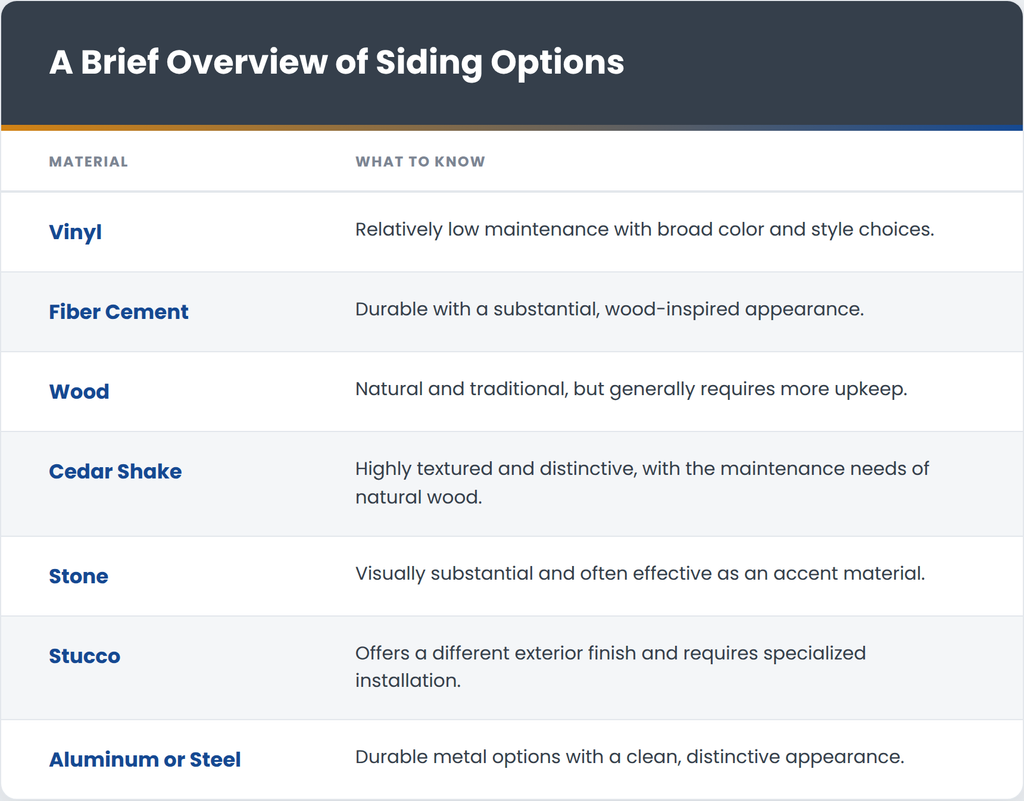
Focus on the siding options that best match your maintenance preferences, budget, and design goals before narrowing your choices by product and color.
Don’t Ignore Color, Profile, and Architectural Style
Choosing the material is only part of the siding decision. Color, profile, texture, and how the new siding works with existing exterior features can make just as much difference in the finished result.
Start with elements you aren’t planning to replace, such as your roof, brick, windows, doors, or existing stone. New siding should complement those materials rather than make them feel disconnected.
Profile also changes the way your home looks from the street. Traditional lap siding creates a different effect than shingle-style siding, while vertical profiles can emphasize height. Accent materials can add dimension to gables, entryways, and other architectural features without taking over the entire exterior.
If you’re replacing roofing and siding around the same time, considering both projects together can make it easier to create a cohesive exterior.
Why Proper Siding Installation Matters
Even the right siding material can fall short if the installation isn’t handled correctly. Flashing around windows and doors, roof-to-wall transitions, weather-resistant barriers, sheathing, trim, and manufacturer-required clearances all play a role.
That means your contractor should be able to explain more than just the visible siding product. You should understand how the full wall system will be prepared and how vulnerable transition points will be addressed.
Platinum Exteriors approaches siding as part of your complete exterior system. Because we also specialize in roofing and exterior services, we can consider how siding connects with rooflines, flashing, trim, and other components instead of treating each area as a separate project.
How to Compare Siding Estimates
Once you’ve narrowed your siding choices, compare contractor proposals based on scope rather than price alone. Two estimates can have similar totals while covering very different amounts of work.
When reviewing an estimate, check whether it includes:
- Removal and disposal of existing siding
- Necessary sheathing repairs
- Weather-resistant barriers and flashing
- Trim and transition details
- Cleanup and required permits
You should also review manufacturer warranties separately from contractor workmanship coverage. Understanding what each warranty applies to makes it easier to compare proposals and know what protection you’re actually receiving.
Choose the Right Siding for Your Maryland Home
The right siding should fit your home, maintenance preferences, budget, and long-term plans. Vinyl and fiber cement can offer practical solutions for many Maryland homeowners, while wood, cedar shake, stone, stucco, aluminum, and steel each bring their own design and maintenance considerations.
Platinum Exteriors can help you compare siding options while looking at how your entire exterior works together. If you’re planning siding replacement for your Maryland home, contact Platinum Exteriors to discuss your project and find an option that fits your property, priorities, and long-term goals.